Global Electric Vehicle (EV) Sales Review | Q3 2025 Market Report

The global electric vehicle (EV) market continued its strong momentum in the third quarter of 2025, with battery electric vehicle (BEV) sales rising sharply across all major regions. According to industry data, total BEV sales grew by more than one-third compared to Q3 2024, marking one of the fastest year-on-year growth rates since 2022. Worldwide, the EV sector remains a cornerstone of the automotive industry’s transition, driven by stronger policy signals, technological innovation, and expanding export demand.


πŸ‘‰ For exporters and international distributors, this growth underscores the rising demand for high-quality EVs from China, such as Hongqi, BYD, and iCAR—now available on our EV Cars Export Page.


Regional EV Market Performance

πŸ‡ͺπŸ‡Ί Europe: Strong BEV Rebound

In Europe’s top five markets (Germany, the UK, France, Spain, and Italy), BEV sales increased by 32% in Q3 2025, reaching 1.37 million registrations—the highest quarterly total since Q4 2022. Year-to-date BEV sales have already exceeded one million units, underscoring Europe’s recovery after a flat 2024. Within the EU, Germany, the UK, and France dominate in scale, while Spain and Italy show rapid percentage growth from a smaller base.


PHEV sales also rebounded strongly, up 65% year-on-year, supported by double-digit increases in most markets—except France, where they fell by 8%.


➑ Takeaway for exporters: Europe remains one of the most stable and policy-driven EV markets, ideal for targeting mid- to high-end BEV and PHEV models that comply with EU emission standards.


πŸ’‘ Popular Export Option for European Markets: 2024 iCAR 03T Long-Range EV – compact SUV with 500+ km range, perfect for urban distributors.

πŸ‡¨πŸ‡³ China: BEV Growth Stabilizes, PHEV Cools

China maintained its position as the world’s largest EV market. BEV sales grew 36% year-on-year in Q3 2025, surpassing the 2-million-unit mark for the first time in a third quarter.


However, PHEV sales declined by 6%, suggesting a market shift toward full electrification as BEV models become more affordable and infrastructure matures.


China’s government continues to support New Energy Vehicles (NEVs) through tax exemptions, purchase subsidies, and license plate incentives, ensuring steady long-term demand.


➑ Export insight: As domestic competition intensifies, Chinese brands are accelerating EV exports to emerging markets—offering opportunities for auto parts suppliers and vehicle traders.

πŸ‡°πŸ‡· South Korea: Explosive BEV Expansion

South Korea’s BEV market surged 86% year-on-year, reaching an 18% market share in Q3 2025. Government incentives, local manufacturing capacity, and expanding fast-charging networks contributed to record adoption.


➑ Export opportunity: Korean automakers are strengthening partnerships abroad; component exporters can benefit from supply-chain integration and rising overseas demand.

πŸ‡―πŸ‡΅ Japan: Hybrid Dominance Continues

Japan’s market remains hybrid-centric, with hybrids accounting for around 60% of new car sales in Q3 2025. While BEV adoption is gradual, recent infrastructure investments and new EV launches by domestic brands point toward steady long-term growth.


➑ Market note: Exporters should monitor Japan’s slow but stable BEV penetration—potential for specialized EV parts and compact segment exports.

πŸ‡ΊπŸ‡Έ United States: Steady BEV Growth, Hybrid Comeback

In the United States, BEV sales grew 22% year-on-year in Q3 2025, reaching a 10% market share for the first time ever. This growth was fueled by consumers taking advantage of the federal tax credit (up to $7,500) before its expiry in late September.


PHEV sales saw a modest 3% increase after four consecutive quarterly declines, while hybrid vehicle sales climbed 20%, securing a 12% share year-to-date.


➑ Export insight: With rising EV demand but ongoing policy uncertainty, the U.S. remains a strategic but regulated destination for EV exports and parts supply.

Government Policies: How Markets Shape EV Growth

Governments play a central role in accelerating EV adoption.

  • The European Union (EU) follows a strict regulatory path, banning new internal combustion engine (ICE) vehicle sales from 2035, with a zero-COβ‚‚ emission mandate for new cars.
  • China takes a market-driven approach, combining subsidies, tax exemptions, and limited ICE license plates—encouraging NEV sales without an outright ban.

πŸ”š Conclusion

Q3 2025 confirmed that EVs are now the dominant growth engine of the global automotive market. With strong policy support, diverse models, and rising affordability, electric cars from China are reshaping global trade flows.

High Tariffs Can’t Stop the Rise Chinese Automakers Double Sales in Europe, Market Share Breaks 5% for the Fourth Straight Month

Despite high EU tariffs on Chinese electric vehicles, Chinese automakers continue to surge across Europe. According to recent industry data, in August 2025, Chinese-brand car sales in Europe doubled year-on-year, while market share rose from 5.3% in July to 5.4%, marking the fourth consecutive month above 5%.
From January to August, cumulative sales reached 430,000 units, representing a 74% year-on-year increase. During the same period, Chinese automakers’ market share expanded from 2.9% in 2024 to 4.9% in 2025, demonstrating remarkable growth momentum.


πŸ‘‰ Flexible Strategy Amid Policy Shifts

When the EU imposed steep anti-subsidy tariffs on fully electric vehicles, Chinese automakers swiftly adjusted their product mix. They increased investment in plug-in hybrid vehicles (PHEVs), catering to local market demand.
In August alone, PHEV sales soared to 10,406 units, accounting for 25% of total Chinese-brand sales—up from just 4% a year earlier. This rapid adjustment has become a key driver of overall sales growth.


πŸ‘‰ Competitive Pricing Drives Market Appeal

Thanks to an efficient supply chain, China’s EV production costs are about 40% lower than Europe’s. Even after tariffs, Chinese electric vehicles retain a strong price advantage.
While the average European EV sells for €50,000–60,000, popular Chinese models such as BYD and MG are priced between €30,000 and €40,000—often €15,000 cheaper than Tesla and other Western brands.
This affordability is proving highly attractive to price-sensitive European consumers seeking value and performance.


πŸ‘‰ Technological Advancements Strengthen Brand Image

Chinese automakers are steadily transforming their image from “low cost” to “high-tech and high-quality.” With continuous breakthroughs in battery systems and intelligent cockpit technologies, China’s automotive industry has greatly improved its competitiveness.
For example, BYD’s Blade Battery excels in both safety and range performance, enhancing consumer confidence in Chinese brands. Consequently, the average export price of Chinese cars rose from USD 14,500 to USD 18,300 over the past three years, showing readiness to compete directly with global leaders like Tesla.


πŸ‘‰ Targeted Market Expansion and Local Partnerships

Rather than competing head-on in traditional strongholds such as Germany and France, Chinese automakers have strategically focused on Italy, Spain, and the United Kingdom, where market opportunities are broader.
By partnering with local dealers and building robust after-sales service networks, they have expanded market coverage, improved customer satisfaction, and laid a solid foundation for sustainable growth across Europe.


πŸ‘‰ Localized Manufacturing to Bypass Tariffs

To further integrate with the European market, Chinese automakers are accelerating localized production:

  • BYD’s Hungary plant is scheduled to begin operations by the end of 2025.

  • Chery’s new base in Spain helps avoid tariff barriers.

  • CATL’s joint battery factory with Stellantis enhances the regional EV supply chain.
    Operating under the “Made in Europe” model not only reduces logistics and tariff costs but also aligns with EU sustainability and industrial policies.


πŸ‘‰ Market Dynamics Favoring Chinese Brands

Europe’s transition toward green mobility continues to gain pace under new 2025 carbon emission regulations, which mandate a higher share of new energy vehicles.
However, local automakers’ slow electrification progress has created a supply gap. In the first half of 2025, Europe’s battery-electric vehicle (BEV) sales exceeded 1.19 million units, providing Chinese automakers a unique opportunity to fill the void and capture rising demand.


πŸ‘‰ European Consumers Embrace Chinese Cars

Consumer sentiment toward Chinese automotive brands is shifting rapidly. Recent surveys indicate that 47% of European car buyers now consider purchasing Chinese models, surpassing the 44% who consider American brands.
Compared with 2024, European consumers are increasingly recognizing the strong value, advanced technology, and reliability of Chinese vehicles. This growing acceptance marks a pivotal moment for Chinese automakers expanding their global footprint.

The Future of Used Car Export to the Middle East

The Middle East is emerging as a pivotal market for used car exports, driven by its growing demand for affordable mobility solutions and strategic geographical position. As the automotive landscape evolves, several key trends are set to redefine the future of the used car trade in this region, with implications that also resonate with the broader African market.


One of the most significant factors shaping the future is the shift toward sustainable transportation. With countries in the Middle East, such as the UAE and Saudi Arabia, investing heavily in green initiatives, there’s an increasing appetite for fuel-efficient and low-emission used vehicles. Exporters are now focusing on sourcing hybrid and electric used cars, which not only align with local environmental goals but also offer long-term cost savings for consumers. This trend parallels the rising demand for eco-friendly options in Africa, where “affordable hybrid used cars for export to Africa” is becoming a popular search term.


Another crucial aspect is the role of digitalization. Online platforms are revolutionizing the way used cars are bought and sold in the Middle East. Virtual showrooms, AI-powered vehicle inspections, and blockchain-based transaction records are enhancing transparency and trust. These digital advancements are also making it easier for exporters to tap into niche markets, both in the Middle East and across Africa. For instance, search term like “reliable online used car export to Africa” highlights the growing reliance on digital solutions for cross-border trade.

The Middle East’s strategic location as a trade hub between Asia, Europe, and Africa also presents unique opportunities. Exporters can leverage regional logistics networks to streamline deliveries, reducing costs and transit times. This efficiency benefits not only Middle Eastern buyers but also those in Africa, where timely access to vehicles is crucial. The synergy between the Middle East and African markets is evident in shared supply chains and demand for rugged, multi-purpose vehicles, as indicated by searches for “durable used cars for export to Africa.”


However, challenges remain. Stringent import regulations, fluctuating oil prices, and competition from local manufacturers require exporters to stay agile. To succeed, companies must invest in market research, build strong local partnerships, and ensure compliance with regional standards. For both Middle East and African markets, “used car export regulations for Africa and the Middle East” is a key search query, underscoring the importance of regulatory knowledge.


In conclusion, the future of used car export to the Middle East is bright, marked by sustainability, digital innovation, and strategic partnerships. By aligning with these trends and capitalizing on the region’s connectivity, exporters can not only thrive in the Middle East but also expand their footprint in the burgeoning African market. As the demand for quality, affordable used vehicles continues to rise across both regions; the time is ripe for exporters to drive this dynamic trade forward.


Top 5 Tips for Buying Used Cars in Africa


Navigating the used car market in Africa can be both rewarding and challenging. With a booming demand for affordable vehicles, it’s crucial to make informed decisions to ensure you drive away with a reliable ride. Whether you’re an individual buyer or a local dealer sourcing from international exporters, these five essential tips, combined with insights into the used car export to Africa industry, will guide you through a successful purchase.

1. Research Reputable Used Car Exporters

Start your journey by identifying trustworthy used car exporters specializing in Africa. Look for companies with a proven track record, positive customer reviews, and a wide inventory of vehicles. Keywords like “reliable used car export to Africa” and “trusted used car exporters for African markets” can help you find top-tier suppliers. A reputable exporter, such as Sinovcle, offers a diverse range of high-quality pre-owned cars, from compact sedans perfect for urban commuting to robust SUVs ideal for rugged terrains. They also provide detailed vehicle history reports, ensuring transparency about a car’s past, including accident records and maintenance history.

2. Understand Your Needs and Budget

Before diving into the market, assess your driving requirements and financial capabilities. Consider factors like the number of passengers you’ll typically carry, the type of roads you’ll be driving on, and your fuel efficiency preferences. If you often travel on unpaved roads, a used 4x4 SUV might be your best bet. On the other hand, a sedan could suffice for city driving. When it comes to budget, factor in not only the purchase price but also ongoing costs like insurance, maintenance, and fuel. Searching for “affordable used cars in Africa” can lead you to cost-effective options that still meet your needs.

3. Inspect the Vehicle Thoroughly

Never skip a comprehensive vehicle inspection. Even if you’re purchasing from an exporter with a good reputation, it’s essential to check the car’s condition. Look for signs of rust, especially in areas prone to moisture, and examine the engine for any leaks or unusual noises. Test the brakes, steering, and electrical systems. If possible, take the car for a test drive. Many exporters now offer detailed inspection reports, and some even provide video inspections, making it easier for buyers in Africa to assess the vehicle remotely. Utilize terms like “used car inspection tips for African buyers” to find useful resources on proper vehicle assessment.

4. Verify Legal and Documentation Requirements

Africa’s various countries have different regulations regarding used car imports. Ensure that the vehicle you’re purchasing complies with the specific requirements of your destination country. This includes verifying that the car meets emissions standards and has all the necessary documentation, such as a clean title, bill of lading, and export certificate. Reputable used car exporters are well-versed in these regulations and can assist you in navigating the paperwork, reducing the risk of delays or issues at customs. Searching for “used car export to Africa documentation” can provide more detailed information on this crucial aspect.

5. Consider After - Sales Support

A reliable after-sales service can make a significant difference in your ownership experience. When choosing an exporter, inquire about their after-sales support. Do they offer warranties? Can they provide access to spare parts? Some exporters have partnerships with local service centers in Africa, ensuring that you can get your vehicle serviced conveniently. Keywords like “used car export to Africa with after-sales support” can help you identify exporters who prioritize customer satisfaction even after the sale is complete.


In conclusion, buying a used car in Africa requires careful planning and research. By following these five tips and leveraging relevant SEO-friendly long-tail keywords related to used car export to Africa, you can enhance your chances of finding the perfect vehicle. Whether you’re a buyer looking for a personal ride or a dealer aiming to expand your inventory, a well-informed purchase will lead to a more satisfying and cost-effective experience in the vibrant African used car market.

Unveiling the Afghan Used Car Market Potential and Pitfalls

The Afghan used car market presents a fascinating paradox of significant opportunity set against considerable risk. For exporters with the right strategy and risk tolerance, it can be a market of immense potential. This article breaks down the core dynamics you need to understand.


  • Market Potential & Drivers: The Opportunity

    • Strong Demand: As Afghanistan's economy gradually recovers, cars have become a necessity. Affordable used cars are highly popular among the general public. Additional demand comes from international aid organizations and growing transportation needs in rural areas.

    • Promising Growth: The vehicle sales market is projected to grow at a significant rate (16.9% by 2025), indicating substantial future potential.

    • Supportive Policies: The Afghan government has introduced tax and loan incentives to stimulate the used car industry, effectively reducing purchase costs and boosting sales.


  • Policy & Tariff Landscape

    • Favorable Tariff Rate: Afghanistan classifies used cars as "second-hand equipment," subject to a uniform and relatively low customs duty rate of 5%. This provides cost certainty for importers.

    • Trade Agreements: Afghanistan has free trade agreements with neighboring countries like Pakistan, Iran, and Tajikistan. This may allow used cars from these countries to also benefit from the low 5% tariff, creating a competitive environment.

    • Complexity & Instability: The trade environment remains complex due to the legacy of conflict. Import processes involve cumbersome customs clearance and various certifications. Critically, policies can be unstable, requiring constant monitoring.


  • Competitive Landscape & Consumer Preferences

    • Market Leaders: The market is dominated by Toyota and Ford. Models known for reliability and off-road capability, like the Toyota Hilux, are particularly favored.

    • Fierce Competition: The market is crowded with numerous dealers and individual sellers. New entrants, including Chinese companies, face challenges such as well-stocked local competitors and a degree of market insularity.

    • Clear Consumer Preferences: Afghan buyers prioritize:

      • Affordability: Price sensitivity is high.

      • Practicality: Vehicles like pickup trucks that serve both passenger and cargo needs are ideal.

      • Durability & Easy Maintenance: Poor road conditions demand robust vehicles. Brands like Toyota are popular due to the widespread availability and low cost of spare parts.


  • Key Challenges for Exporters

    • Political & Security Risks: The overall security situation is unstable, and the trade policy landscape can shift unexpectedly.

    • Complex Import Procedures: Navigating customs, certifications, and regulatory compliance is a major hurdle.

    • Price-Sensitive Market: With limited local purchasing power, exporters must find a precise balance between price and quality. Cheap but unreliable vehicles will not succeed.


The Afghan used car market is not for the faint-hearted. It promises high growth driven by essential demand and supported by low tariffs. However, exporters must enter with a clear-eyed view of the challenges: political instability, logistical complexity, and fierce competition.

Why Has Algeria's Car Import Volume Surged Recently?

In 2025, Algeria’s car import market has seen an unprecedented surge, particularly in the used car segment. Among the most sought-after models is the Jetta VS7 2023, which has quickly gained popularity due to its affordability, reliability, and modern features. Chinese used cars in Algeria, especially models like the Jetta VS7 2023, are becoming a top choice for cost-conscious buyers.


Here’s a closer look at the factors driving this boom and key challenges exporters face when entering the Algerian vehicle import market.


πŸ“Œ Government Policy Support: Lower Taxes, Wider Access

Algeria’s regulatory update — Administrative Order No. 74 — allows individuals to import second-hand vehicles up to 3 years old. Each person can buy one car every 3 years, and payments can be made in foreign currency, significantly lowering barriers to entry in the Algeria used car market.


Key incentives include:

  • Cars with an engine capacity of 1800cc or below enjoy a 50% tax reduction

  • Electric vehicles receive an 80% tax exemption


The Jetta VS7 2023, with its efficient engine options under 1800cc, benefits from this policy, making it highly cost-effective for Algerian buyers. Additionally, a new customs policy introduced in July 2025 stipulates that import duties for Chinese car exports to Algeria are based on “country-of-origin pricing,” significantly lowering tariffs and enhancing the price competitiveness of Chinese used cars in Algeria.


πŸ“Œ Strong Domestic Demand: Low Car Ownership, Big Market Potential

As of mid-2025, Algeria’s population is projected at 47.43 million, with a total vehicle ownership of just 6.5 million — roughly 137 cars per thousand people. This low car ownership rate shows huge potential for growth in both the new and used car markets in Algeria.


Rising incomes and expanding middle-class consumption have increased demand for affordable cars in Algeria. Models like the Jetta VS7 2023 provide an attractive combination of modern features, space, and value, making them a preferred choice in the Algerian used car market.


πŸ“Œ New Car Market Shortage: Price Hikes and Low Supply

The Algerian new car market continues to struggle with high prices and limited availability. Long wait times and inflated costs have pushed buyers toward second-hand vehicles in Algeria, which are more affordable and readily available. The Jetta VS7 2023 stands out as a ready-to-import model that meets local demand, directly contributing to the surge in Algeria car imports.


πŸ“Œ China Emerging as a Major Vehicle Supplier

Thanks to technological upgrades and strong after-sales support, Chinese used cars in Algeria are gaining recognition. In 2024, Chinese brands captured 12% of Algeria’s vehicle market, and models like the Jetta VS7 2023 helped solidify this share. With the 2025 tariff adjustment, Chinese car exports to Algeria enjoy a stronger price advantage, driving further growth in the Algerian used car market.


πŸ“Œ Key Challenges When Dealing with Algerian Buyers

Despite growing demand, the Algeria automotive market has unique buyer characteristics:


  • High price sensitivity: Inflation and economic challenges make Algerian customers extremely price-conscious. Even minor differences of tens of dollars can trigger negotiation — especially for new cars.

  • Preference for budget-friendly models: Mid- to low-end vehicles dominate the market. Second-hand cars in Algeria, such as the Jetta VS7 2023, often provide smoother negotiations than brand-new units, making them a preferred option for cost-conscious buyers.


βœ… What This Means for Exporters

Algeria is now a high-potential market for used cars under 1800cc and electric vehicles. Exporters that offer competitive pricing, transparent vehicle condition, and smooth transaction processes — especially for models like the Jetta VS7 2023 — will have a strong edge. Understanding Algerian car buyer price sensitivity and local market dynamics is crucial for long-term success in Algeria car imports.


Want to explore Chinese car exports to Algeria and seize the growing Algerian used car market? Contact Sinovcle, our team now for the latest vehicle lists, shipping solutions, and Algeria automotive market insights — including ready-to-export Jetta VS7 2023 units.


Can You Angle Solar Panels on a Roof?

Yes, solar panels can—and should—be angled on a roof to maximize their energy production. The angle at which panels are mounted determines how much sunlight they can capture throughout the day and across the seasons. Properly angling solar panels helps achieve optimal energy efficiency, reduces dirt accumulation, and improves system longevity. However, the right mounting system plays a crucial role in achieving and maintaining that ideal tilt.

When installing solar panels, the tilt angle is usually determined by the geographical latitude of the site. For instance, in regions closer to the equator, a low tilt angle (around 10–15°) is sufficient, while areas farther north or south benefit from steeper angles (25–40°). A properly angled array ensures that panels face the sun perpendicularly during peak daylight hours, generating the highest possible power output.

adjustable solar panel tilt mount

For pitched roofs, the panel angle often follows the natural slope of the roof. If the existing roof pitch closely matches the ideal tilt, installers can use flush mounting systems to secure the panels directly along the roofline. However, if the roof angle is too steep or too flat for optimal solar gain, adjustable mounting systems can be used to modify the tilt. Manufacturers like SIC Solar, a trusted producer of photovoltaic mounting systems, design adjustable brackets and racking structures that allow installers to fine-tune the panel angle to match specific project requirements.

On flat roofs, angling is especially important. Since these surfaces have little to no incline, panels must be mounted on tilt frames or ballasted systems to achieve the correct orientation. A tilt of around 10–30° is common to maximize sunlight exposure and prevent water pooling or debris buildup. SIC Solar’s aluminum tilt mounting systems are popular choices for such applications, offering both durability and ease of installation. Their designs also minimize wind resistance and distribute loads evenly across the roof.

Angled mounting systems also contribute to better self-cleaning performance. When panels are tilted, rainwater can naturally wash away dust and debris, maintaining higher energy conversion efficiency over time. In contrast, flat-mounted panels tend to collect dirt and require more frequent cleaning, especially in dry or dusty environments.

Another important benefit of adjustable angles is seasonal optimization. Some solar arrays are designed to be re-angled throughout the year, especially in off-grid or high-latitude regions. During winter months, when the sun sits lower in the sky, a steeper angle helps capture more sunlight. In summer, a shallower tilt prevents overheating and balances energy production.

When designing an angled solar installation, aerodynamics and wind load must be carefully considered. Panels that are too steeply tilted may experience higher uplift forces during storms or strong winds. High-quality mounting systems, such as those engineered by SIC Solar, undergo wind tunnel testing and structural analysis to ensure they remain stable under harsh weather conditions. Materials like anodized aluminum and stainless steel provide long-lasting resistance to corrosion, ensuring the mounting structure maintains its strength over time.

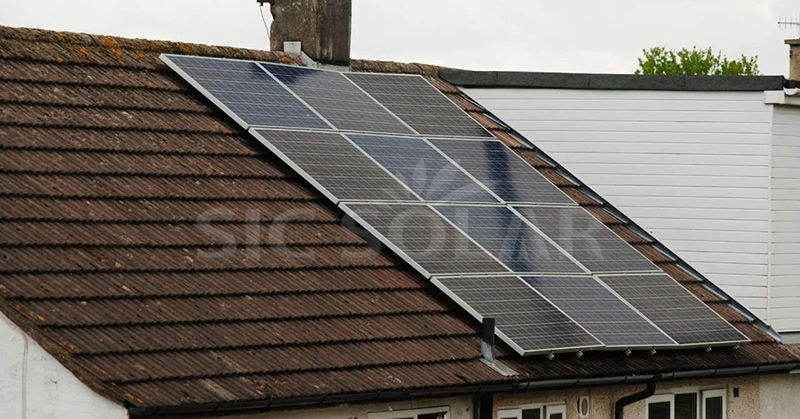
Roof type also affects how the panels are angled and attached. On tiled roofs, adjustable tile hooks or L-feet mounts can be used to achieve the desired tilt without damaging the roofing material. On metal roofs, standing seam clamps allow for secure attachment without drilling holes, keeping the system watertight. Each design prioritizes safety, structural integrity, and energy efficiency.

Even with a fixed tilt, careful panel orientation can further improve performance. In the northern hemisphere, solar panels are generally angled facing south to receive maximum sunlight, while in the southern hemisphere, they are oriented northward.

Ultimately, the ability to angle solar panels gives installers and system designers greater control over energy performance and long-term reliability. Using well-designed, adjustable mounting systems ensures panels maintain their optimal tilt while withstanding environmental stress.

Through innovative engineering and precision manufacturing, SIC Solar provides mounting solutions that make angled installations both simple and secure. Their systems support diverse roof types and offer adjustable configurations that maximize solar energy generation for residential, commercial, and industrial projects around the world.

How Do I Attach a Solar Panel to My Roof?

Installing solar panels on a roof is one of the most effective ways to harness clean, renewable energy directly from the sun. However, the process of attaching solar panels must be done carefully to ensure both system efficiency and the structural safety of the roof. The type of mounting system, the roof material, and the installation method all play critical roles in how well the panels perform over time.

The first step in attaching solar panels is choosing the right mounting system. There are different types depending on the roof design—pitched, flat, or metal. Each roof type requires specific hardware to ensure a secure and leak-free installation. Manufacturers like SIC Solar, a professional producer of photovoltaic mounting systems, provide a wide range of roof mounting solutions designed to fit various roofing materials and conditions.

installing solar panels on a slate roof

For pitched roofs, the most common method involves using roof hooks or brackets. These hooks are installed under or around the roof tiles and attached directly to the rafters, providing a strong anchor point for the mounting rails. Aluminum rails are then fixed onto the hooks, and the solar panels are clamped securely in place. This system allows for even weight distribution and ensures the panels can withstand wind and snow loads.

If your roof is covered with asphalt shingles, the process involves installing flashing beneath the shingles to prevent water leaks. Mounting brackets are screwed into the roof rafters through the flashing, and sealant is applied to ensure the penetration points remain watertight. Once the rails are mounted, panels are attached using mid and end clamps.

For metal roofs, the installation is usually simpler. Instead of drilling into the roof, standing seam clamps can be used to attach the mounting system directly to the seams without penetrating the roof surface. This method maintains the integrity of the roof while providing a strong, stable base for the panels. SIC Solar offers a range of metal roof clamps designed for quick installation and long-term reliability, ensuring both safety and durability.

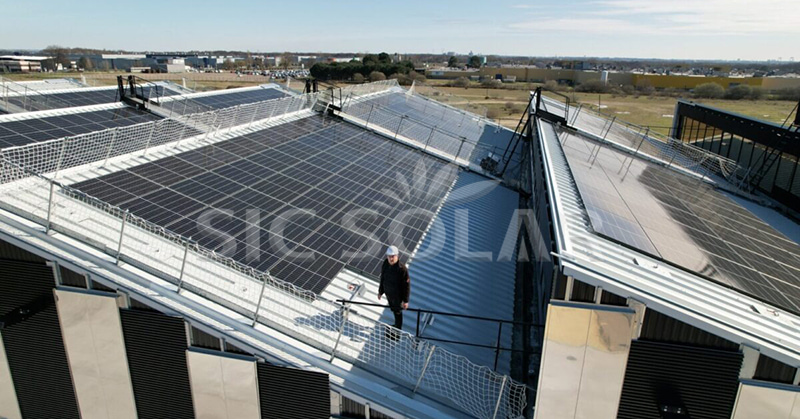
When dealing with flat roofs, installers typically use ballasted or tilt mounting systems. Ballasted systems rely on weight—such as concrete blocks—to hold the panels in place, avoiding the need for drilling or penetration. Tilt systems, on the other hand, allow the panels to be positioned at an angle to capture maximum sunlight. These systems are especially popular in commercial installations where the roof can handle the additional load.

No matter the roof type, ensuring proper alignment and spacing is essential. Panels should be arranged to avoid shading from nearby structures or other panels. Wiring and cable management are also important aspects of installation—cables must be routed neatly and secured with clips to prevent damage or electrical hazards.

Waterproofing is another key consideration. Even when mounting systems require roof penetration, installers use specialized flashing, gaskets, and sealants to maintain the waterproof integrity of the roof. This step prevents leaks and extends the lifespan of both the solar system and the roofing materials.

Another crucial part of the process is ensuring that the solar panels are properly grounded. Grounding prevents electrical faults and provides safety during lightning strikes or short circuits. High-quality mounting systems like those from SIC Solar are designed with integrated grounding solutions, simplifying the process and ensuring compliance with international safety standards.

The choice of materials in a mounting system also determines its longevity. Most modern systems use aluminum and stainless steel, known for their strength, corrosion resistance, and lightweight properties. These materials are ideal for withstanding harsh weather conditions while reducing overall roof load.

Before installation begins, it’s vital to assess the roof condition. The surface should be strong enough to bear the additional weight of the solar system. For older roofs, it’s often recommended to make necessary repairs or replacements before proceeding with the installation.

Attaching solar panels to a roof requires precision, expertise, and the right equipment. Well-designed mounting solutions not only make installation faster but also ensure long-term safety and energy efficiency.

Through continuous innovation and design refinement, SIC Solar provides dependable roof mounting systems for all kinds of solar applications. Whether for residential, commercial, or industrial projects, their products combine structural integrity, ease of installation, and weather resistance—helping homeowners and businesses confidently transition to sustainable solar energy.

What Are the Key Features of Solar Mounting Solutions for Utility-Scale Projects?

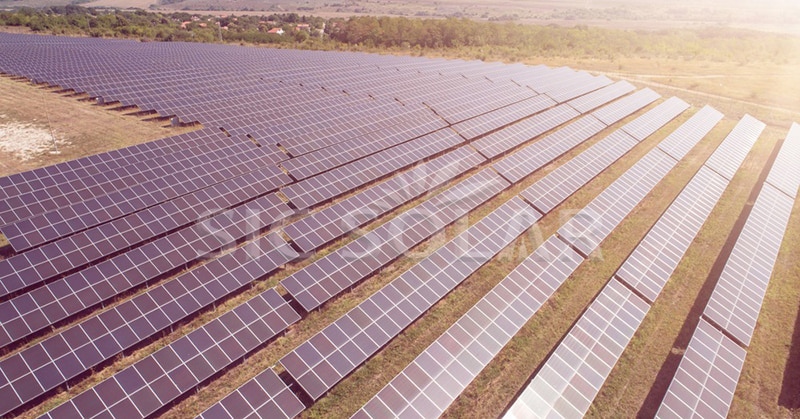
Utility-scale solar projects—large installations designed to power communities, cities, or industries—demand mounting systems that combine strength, precision, and cost efficiency. The scale of these projects means every component, from the foundation to the panel alignment, must be optimized for performance and longevity. The quality of the solar mounting solution directly affects the project’s output, installation speed, and maintenance requirements.

pitched roof solar mounting

One of the most important features of a mounting system for utility-scale projects is structural durability. Large solar farms are often built in open, exposed environments—deserts, plains, or coastal regions—where wind speeds and temperature fluctuations can be extreme. To withstand these conditions, manufacturers like SIC Solar design their mounting systems using high-strength aluminum or galvanized steel with anti-corrosion coatings. This ensures that the structures remain stable and reliable throughout decades of operation, even under harsh weather.

Another essential feature is adaptability to terrain. Unlike rooftop systems, ground-mounted utility projects may cover uneven or sloped land. Advanced mounting systems are designed with adjustable angles and customizable foundations to accommodate site conditions. Depending on the soil type and topography, developers may choose between ground screw foundations, concrete piers, or pile-driven supports. This flexibility allows efficient installation across different geographical environments without compromising system stability.

Ease of installation is also a key design consideration. Utility projects can involve tens of thousands of solar panels, and reducing installation time directly translates into lower labor costs. Mounting manufacturers like SIC Solar develop pre-assembled or modular mounting structures that minimize on-site work. Fewer components, simplified connections, and standardized assembly procedures make large-scale deployment faster and more efficient.

Another defining feature of utility-scale mounting systems is precision alignment. The angle and orientation of each panel must be optimized to capture maximum solar radiation. Many modern systems are compatible with single-axis or dual-axis tracking technologies, which allow panels to follow the sun’s movement throughout the day. High-quality mounting structures must maintain this alignment accuracy while supporting the dynamic motion of the trackers, requiring strong mechanical integrity and durable moving parts.

Corrosion resistance and low maintenance are equally critical. Utility-scale systems are designed for long lifespans—often exceeding 25 years. To ensure such durability, mounting components must resist moisture, UV exposure, and chemical reactions. SIC Solar employs advanced surface treatments and high-grade materials that reduce wear and extend system life, reducing the total cost of ownership over time.

Another emerging feature is the focus on sustainability and recyclability. As the renewable energy sector grows, the environmental impact of mounting materials is gaining attention. Lightweight, recyclable aluminum frames and minimal concrete use are becoming standard choices for eco-conscious developers.

Finally, compatibility and scalability are key. A well-designed mounting solution must integrate seamlessly with various panel sizes, cable management systems, and grounding setups. Utility-scale projects often expand in phases, so the ability to scale up efficiently without design changes is a valuable feature.

In essence, utility-scale solar mounting systems must balance strength, adaptability, and cost efficiency. Through careful engineering and material innovation, companies like SIC Solar deliver solutions that meet the demands of large-scale renewable energy projects worldwide. Their focus on durability, flexibility, and fast installation ensures that solar farms operate efficiently and reliably, contributing to global clean energy development.

What Type of Roof Is Not Good for Solar Panels?

Not every roof is suitable for solar panel installation. The type, age, and condition of your roof all affect how safely and efficiently panels can be mounted. While most modern mounting systems—like those developed by SIC Solar, a manufacturer of photovoltaic mounting structures—are adaptable, some roof types still pose challenges.

One of the least suitable roof types for solar is wood shake or slate roofing. Both materials are fragile and can crack easily when installers drill or fasten mounts. This can lead to water leaks and structural issues over time. Because of their uneven surface, securely fixing solar brackets becomes difficult, making ground-mounted or alternative installations a safer option.

Clay tile roofs can also be complicated. Although they are durable and aesthetically appealing, their curved shapes require special hooks or replacement tiles to support solar panels. Improper handling can result in broken tiles or compromised waterproofing. Mounting systems like those from SIC Solar are designed with adjustable hooks that minimize roof penetration and reduce the risk of damage, but the process still requires professional skill.

Flat roofs are another category that needs careful attention. While they offer flexibility in panel orientation, poor drainage or weak structure can cause water pooling and load-bearing problems. Ballasted or tilt mounting systems work best here, as they avoid excessive drilling and distribute weight evenly. However, installers must ensure the roof can handle the added load before installation.

solar panels for flat roofs

Thatched roofs are unsuitable for solar installations altogether. They are flammable, soft, and uneven, making it unsafe to mount any heavy or heat-generating equipment on them.

Even asphalt shingle roofs, though widely used and generally good for solar, can become problematic if they are too old or damaged. Cracked or curled shingles reduce mounting stability and may require roof repair or replacement before adding solar panels.

Besides the roof material, orientation and shading are key considerations. Roofs that face away from the sun or are heavily shaded by trees and nearby buildings won’t produce optimal energy. Similarly, roofs with extreme slopes can make installation more difficult and increase labor costs.

In these cases, choosing a reliable and well-engineered mounting system is crucial. SIC Solar provides mounting structures made from high-strength aluminum and stainless steel, offering corrosion resistance and long-term durability. Their designs adapt to different roof types while ensuring both safety and performance.

While some roofs are naturally more solar-friendly than others, the right technology and professional installation can make a significant difference. Selecting durable, roof-specific mounting solutions helps ensure stable, efficient energy generation for years to come.