What Is a Ground Mount Solar Mounting Structure?

When people think of solar energy systems, rooftops are usually the first image that comes to mind. However, solar panels don’t always have to be attached to a building. For properties with sufficient land, ground-mounted solar installations offer an effective and flexible alternative. At the heart of these systems lies the ground mount solar mounting structure, which is the framework that secures panels firmly to the earth while ensuring optimal orientation for energy production.

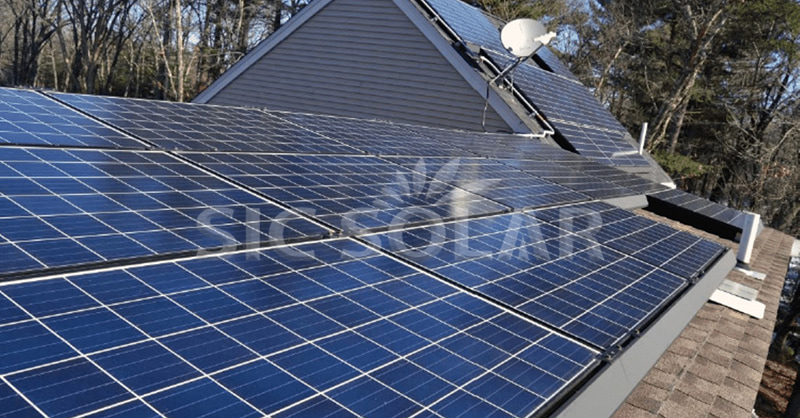
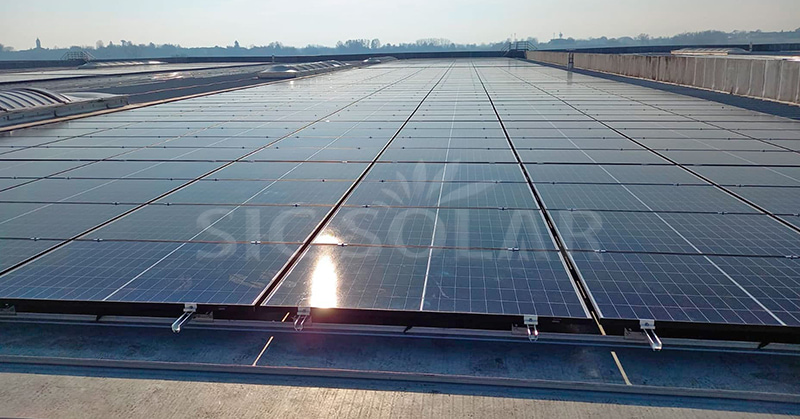
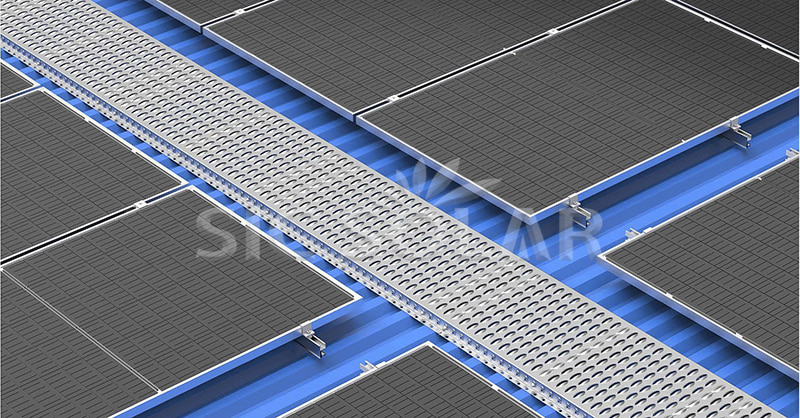
solar array ground mount

A ground mount solar mounting structure is essentially a racking system that holds solar panels above the ground, typically supported by posts, rails, or foundations. Unlike rooftop systems, which are limited by the roof’s angle and available space, ground-mounted structures can be installed at the perfect tilt and direction to capture maximum sunlight. This flexibility often results in higher energy output compared to roof-based systems.

There are generally two main types of ground mount structures: standard fixed-tilt systems and tracking systems. Fixed-tilt systems hold panels at a set angle, chosen to optimize sunlight exposure throughout the year. They are straightforward, durable, and relatively easy to install. Tracking systems, on the other hand, allow panels to move and follow the sun’s path across the sky. While more complex and costly, they can significantly increase electricity generation by keeping panels aligned with the sun for longer periods of the day.

Ground mount structures are built using durable materials like galvanized steel or anodized aluminum, which resist corrosion and withstand environmental stresses such as wind, rain, and snow. These structures must also be engineered to support the weight of multiple panels while maintaining stability over decades of use. Strong foundations, whether driven piles, concrete footings, or ballast systems, are essential to prevent shifting or tilting over time.

One of the additional benefits of ground-mounted solar is ease of maintenance. Since panels are accessible at ground level, cleaning, inspections, and repairs can be carried out more conveniently compared to rooftop systems. This accessibility helps ensure that the system maintains peak performance with minimal effort.

Companies such as SIC Solar, a manufacturer and supplier of photovoltaic mounting brackets, design ground mounting solutions that combine strength, reliability, and ease of installation. Their systems are engineered to meet the demands of both residential and commercial projects, ensuring solar panels remain secure and efficient over their full lifespan.

For anyone with open land and a desire to maximize solar energy production, ground mount solar mounting structures represent a practical and long-lasting solution. By providing stability, optimal orientation, and durability, they form the backbone of efficient solar power generation beyond the rooftop.

What Is the Disadvantage of a Solar Roof?

Solar roofs have become an attractive option for homeowners and businesses eager to embrace renewable energy without compromising aesthetics. Unlike traditional solar panels that sit atop existing roofing, solar roofs integrate photovoltaic cells directly into the roofing material, creating a seamless and modern look. While the idea is appealing, it is important to recognize the potential disadvantages before deciding if this solution is the right fit.

solar system roof tiles

One of the most notable drawbacks of a solar roof is its high initial cost. Traditional solar panels combined with mounting systems are often significantly less expensive than integrated solar roof tiles. This makes solar roofs less accessible to many households, especially when budget is a deciding factor in the shift to renewable energy.

Another disadvantage lies in installation complexity. Installing a solar roof requires specialized expertise, and not all contractors have the necessary training or certifications. The process can also take longer compared to mounting standard solar panels with reliable brackets and clamps. In some cases, homeowners may even need to replace their existing roof entirely to accommodate the solar tiles, adding to the expense and project duration.

Maintenance and repair can also present challenges. If one section of a solar roof malfunctions, repairing or replacing individual tiles may be more complicated and costly than servicing traditional panels. Accessibility is limited, and finding replacement parts can take longer. In contrast, with a conventional solar array mounted on brackets, a faulty panel can be swapped out relatively easily.

Efficiency is another point of concern. While solar roofs continue to improve, traditional solar panels often provide higher efficiency ratings. This means that to achieve the same level of power generation, more surface area may be needed, which is not always possible depending on the size and orientation of a roof.

Durability in harsh climates can also be debated. Although solar roofs are engineered to withstand typical weather conditions, extreme hail, snow, or heat may impact their longevity. Companies like SIC Solar, which specialize in manufacturing and selling photovoltaic mounting brackets, highlight the advantages of conventional panel systems that can be securely fastened and angled for optimal durability and performance.

For many homeowners, solar roofs remain a stylish but premium option. Considering the balance between cost, practicality, and energy efficiency, traditional solar panels mounted with professional-grade systems often provide a more flexible and cost-effective alternative.

Why Investing in High-Quality Solar Mounting Systems Saves You Money in the Long Run

When people think about solar energy, the focus is usually on panels, inverters, and storage solutions. However, the mounting system—the structure that holds panels in place—is often overlooked, even though it plays a crucial role in the overall success and financial return of a solar project. Choosing a high-quality solar mounting system may seem like a higher upfront expense, but in reality, it can save significant amounts of money over the life of the installation.

One of the most important reasons is durability. A well-engineered mounting system can withstand heavy wind loads, snow, and long-term exposure to harsh weather. Cheaper alternatives may corrode, loosen, or fail over time, leading to costly repairs or even damage to the panels themselves. With a reliable system in place, the risk of unexpected maintenance is drastically reduced.

Another factor is efficiency in energy production. High-quality mounting systems allow panels to be positioned at optimal angles, ensuring they receive maximum sunlight throughout the year. Even a small improvement in efficiency adds up significantly over decades of operation, directly translating to higher returns on investment.

There are also safety and compliance benefits. Inferior materials or poorly designed brackets can pose risks not only to the solar equipment but also to the building or land where they are installed. By using mounting systems that meet international standards, property owners ensure long-term safety while avoiding potential penalties or replacement costs.

From a financial perspective, high-quality mounting systems are an investment in longevity and reliability. Since solar projects are expected to last 20 to 30 years, the structural components must perform for the same lifespan. Choosing a strong, corrosion-resistant system eliminates the need for premature replacements, helping projects stay on budget.

solar roof mounting system

Companies like SIC Solar, a producer and supplier of photovoltaic mounting brackets, design their solutions with this long-term perspective in mind. Their systems are built from robust materials like anodized aluminum and stainless steel, offering resistance to rust and wear. These engineering choices ensure installations remain stable and secure for decades.

In the bigger picture, the cost of downtime, system failures, and inefficient performance far outweighs the modest savings from selecting cheaper mounting solutions. By prioritizing quality from the start, project developers, homeowners, and businesses ensure smoother operation, consistent power generation, and ultimately, greater financial returns.

Project Update | 650kW Mini Standing Seam Metal Roof Solar System in Mali, Africa

JinMega is driving solar forward across Africa! 

We’re excited to showcase our latest achievement — a 650kW solar project in Mali built with the JinMega Mini Standing Seam Metal Roof Mount system. Designed for precision and efficiency, this solution delivers reliable clean energy while ensuring faster and easier installation on standing seam metal roofs. 


Our Mini Mount solution brings reliability and efficiency to projects across diverse conditions:

- Made of high-strength AL6005-T5 with excellent corrosion resistance, ensuring long service life. 

- Pre-assembled components and snap-in design significantly reduce installation time and labor costs. 

- Compatible with multiple standing seam profiles, offering versatile application and customized options. 


We invite you to explore more of our metal roof mounting solutions designed to optimize performance and simplify installation. Discover More JinMega Metal Roof Products here www.jinmegasolar.com


Project Update | BIPV Rooftop Mounting System in Changtai, Fujian

We are pleased to highlight a new rooftop solar project located in Changtai, Zhangzhou. The installation, with a capacity of 65 kW, adopts a fixed BIPV flat roof mounting system. Once in full operation, the project is expected to generate nearly 80,000 kWh of renewable electricity each year, cutting energy expenses while supporting the client’s path toward sustainability.


The BIPV rooftop mounting solution is designed with both strength and simplicity in mind. Its lightweight yet robust structure ensures high resistance to wind and weather, while the clean design integrates smoothly with existing building rooftops. This balance of durability and efficiency makes it a reliable choice for long-term solar generation. 


At JinMega, we continue to provide innovative and customized rooftop PV solutions that enable businesses to make better use of their roof space. By turning rooftops into sources of renewable power, we help our partners capture greater energy value and move closer to a low-carbon future. Explore more about our solar roof mounting systems here www.jinmegasolar.com


Product Spotlight | Aluminum Elevated Fixed Agriculture Mounting System

At JinMega, we are advancing the application of solar mounting systems in agriculture with innovative designs that maximize both crop growth and solar generation. Our Aluminum Elevated Fixed Agriculture Mounting System supports installation heights up to 3.5 meters, with adjustable triangular frames for optimal sunlight penetration and energy yield. 


Why Choose JinMega?

·High-strength AL6005-T5 & SUS304, resistant to corrosion, snow, and typhoons. 

·Modular design with high factory pre-assembly for quick on-site installation.

·0°–30° single-row angle adjustment for seasonal optimization of crop light and solar output.


We are continuously developing new Agri-PV solutions and will showcase them at J AGRI TOKYO 2025 in Japan on October 1st. Stay tuned for more updates! Discover how JinMega Agriculture Solutions can maximize the synergy between crops and solar, click at www.jinmegasolar.com 

Project Highlight | 998.68 kW Steel Mounting Solution — Concrete Pole Mounting in Thailand

We’re proud to share a successful JinMega installation — a 998.68 kW solar project in Thailand equipped with our Steel Mounting Solution — Concrete Pole Mounting. This system is designed for sites where ground space is limited or challenging — from rural landscapes to uneven terrain — offering a robust, space-efficient solution for maximizing solar output.


Why it works for Thailand’s diverse terrain

·Pre-stressed high-strength foundation ideal for large-scale solar parks in diverse terrains.

·Simple construction with pre-assembly services for a faster build.

·Customized to meet unique site conditions and maximize performance.


At JinMega, we create solar mounting solutions that adapt to your environment — not the other way around. Explore how our Ground Solar Mounting System can power your next project with stability, speed, and savings. Learn more at www.jinmegasolar.com


Project Update | Rooftop Solar System in Zhangzhou, Fujian

We’re excited to share another successful project delivered by JinMega — a 399.32kWp distributed rooftop solar system for Tianyi Art, located in Zhangzhou, Fujian


This C&I solar distributed project adopts the installation methods of flat roof and metal roof. The roof layout design service and mounting systems are provided by JinMega Solar, designed to ensure structural stability and long-term durability. With a projected annual generation of approximately 480,000 kWh, the project will significantly offset the client’s electricity consumption, reducing operational costs and carbon emissions.


Learn more about our rooftop solar mounting systems at www.jinmegasolar.com


How to Maintain an EV Charge?

In Norway, with a new energy vehicle penetration rate exceeding 30%, some car owners' home chargers have run stably for 8 years. In contrast, in humid, hot Southeast Asia, users report frequent malfunctions within 2 years. What causes this stark difference in EV charger lifespans? It boils down to daily maintenance and device design. As a crucial link between the grid and vehicles, a charger's lifespan impacts costs and charging safety. We'll share global tips to extend charger life and spotlight devices with "longevity genes".

I. Global Consensus Among Car Owners: 6 Golden Rules to Extend EV Charger Lifespan
Car owners worldwide have summarized practical maintenance experiences based on different climatic environments. These 6 methods have been proven through practice to effectively extend the lifespan of EV chargers:
💧 Interface Cleaning: The First Line of Defense for Charging Safety
Charging interfaces are prone to dust accumulation and moisture. Use a dust cover for protection after each charge, wipe the contacts with alcohol pads monthly, and focus on cleaning the grooves of European Type 2 interfaces and the pins of American CCS interfaces.
🧵 Cable Care: Avoid "Violent Bending"
Frequent bending can cause the copper core of the charger cable to break. After use, let it hang naturally or coil it for storage. Home chargers can be equipped with hooks, and public chargers can be organized with dedicated brackets.
🌡️ Extreme Weather Protection
Targeted protection is needed for different climates: in northern regions, choose devices with low-temperature preheating functions; in tropical areas, use products with IP55 or higher waterproof ratings, and install sunshades or rain shelters if necessary.
📦 Regular Appearance Inspection
Monthly inspect cables and casings. For any signs of cracks or damage, cease use and repair promptly to avoid short circuits.
🧑‍💻 Software Updates
Regularly update the charger firmware and enable automatic update functions to enhance the device’s adaptability to power grid fluctuations.
🔋Load Management
In areas with unstable power grids, using devices with overvoltage protection or dynamic load adjustment functions can extend the lifespan by 40%.II. Devices with Inherent "Longevity Genes": Designs That Make Maintenance Easier
New-generation devices integrate the concept of "less maintenance, longer lifespan" into their design. Our products draw inspiration from global extreme environment cases and feature the following hassle-free designs:
♨️Military-Grade Protection: EC01 Commercial Charger
Adopts an IP65 fully enclosed weather-resistant ABS shell and has passed extreme tests from -40℃ to 70℃. After 3 years of exposure to sun and rain at an open-air charging station in Thailand, the shell remains un cracked and the interface shows no oxidation, requiring only daily wiping for maintenance.
🧑‍💻 Intelligent Self-Inspection System: EP01/EP02 Home Chargers
Equipped with 16 real-time monitoring items, automatically detecting temperature, insulation, voltage, etc. When dust affects charging or voltage is abnormal, the APP sends cleaning reminders and automatically cuts off power in case of overload, making it more proactive than traditional devices.
🧵Tool-Free Maintenance
The charging gun cable is replaceable, and the interface module can be disassembled and cleaned by hand. Combined with a dust cover, users can easily complete basic maintenance, reducing reliance on professional repairs.
⚡Adaptive Power Grid: D30 Fast Charger
Fully compatible with 100-240V wide-range voltage and intelligently adjusts loads. In tests in New Delhi, India, its anti-voltage shock performance exceeded the industry average by 50%, making it suitable for global power grids.III. Longevity Is Not Just About "Lasting Long", But Also About "Running Stably"
Data from a Dutch charger laboratory shows that the performance of ordinary devices drops by 30% after 5,000 charging cycles, while devices equipped with high-quality components and intelligent protection can still maintain over 90% efficiency after 10,000 cycles. Choosing the right device not only reduces replacement costs but also ensures a long-term stable charging experience.
If charger glitches bother you or you're eyeing a reliable unit, click www.fescharging.com for tailored solutions. Remember, picking a low-maintenance charger is key to long-term ease.

Want to Save Big on EV Charging?

As electric vehicles gain global popularity, charging costs have become a key concern for both individual owners and commercial operators. By 2024, China alone had over 30 million new energy vehicles, making electricity expenses unavoidable. Time-of-Use (TOU) Pricing – a dynamic system tied to grid demand – splits the day into peak, flat, and off-peak periods. Prices rise during peak hours to ease grid strain and drop significantly during off-peak times, with peak rates reaching up to three times off-peak levels in some cities. This difference creates major savings opportunities.

🔋TOU Pricing not only optimizes power allocation but also cuts costs: industry data shows individual owners can reduce annual charging expenses by 20%-35%, while commercial operators save 15%-25% through large-scale off-peak charging. As a leader in new energy charging, our smart products fully support TOU adaptation, helping users balance green energy use with cost savings worldwide.
💵The logic is simple: use low off-peak grid prices (e.g., 23:00-07:00) to auto-adjust charging times, avoiding high peak rates. This saves money for individual owners and delivers long-term cost reductions for commercial scenarios like charging networks and corporate fleets.
💥Key advantage: our top EV charging products all support TOU settings for diverse needs:

🔌EP01/EP02: Home portable essentials. Use the app to preset off-peak times with one click – set before bed for a full, cost-effective charge by morning. Built-in AI learns your driving habits (e.g., tracking weekly travel patterns) to recommend optimal charging windows, making energy savings effortless.

🪨EC01: Commercial wall-mounted charger for multi-scenario use. Batch-set TOU strategies to cut costs and boost efficiency. Manage hundreds of units centrally via backend systems, ideal for malls and offices needing scalable, cost-controlled charging solutions.

🌴D30: High-power DC fast charger with smart time-sharing. It balances fast charging with price optimization, perfect for fleet refueling. Dynamic power adjustment ramps up during off-peak times for quick charging and reduces during peaks to avoid high fees – saving ~¥3,000/month for 10-vehicle fleets in tests.

☀️CANNON-300: Industrial-grade solution with precise TOU response and load adjustment. Seamlessly connects to enterprise energy management systems, monitoring real-time price fluctuations and power loads. It allocates more power during off-peak periods and prioritizes critical equipment during peaks, balancing cost and efficiency.

Whether for home or business, TOU-enabled chargers make electricity use smarter and costs more manageable. To learn more, click here.