What Are the Advantages of a Pole Mounted Substation?

You'll often see pole-mounted substations in power grids, especially out in rural areas, at factories, and with renewable energy setups. Think transformers, switches, fuses, and safety stuff all up on a concrete or steel pole. Putting them up high like this is smart because it's cheaper and works better than putting them on the ground or inside.

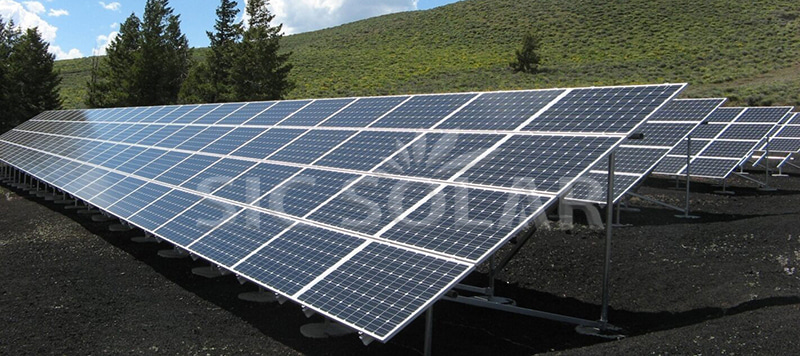
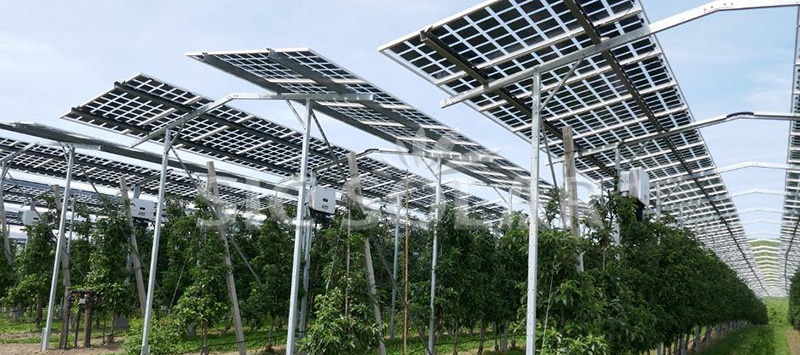
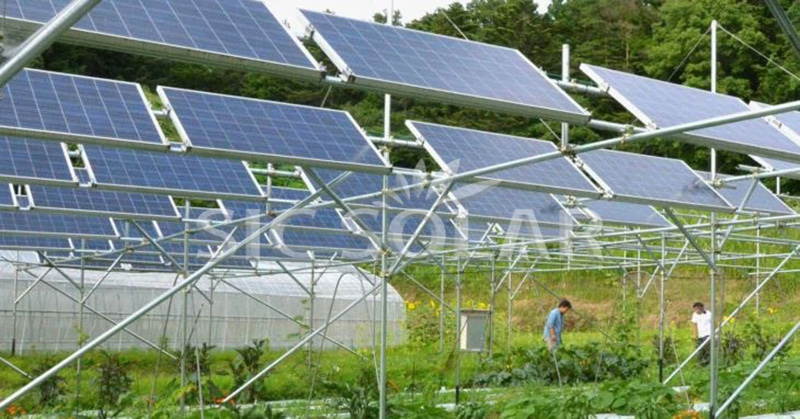
pole ground mount solar bracket

One big plus is that they don't cost as much to put in. Since you're just sticking stuff on poles, you don't need to build a whole building or do a ton of groundwork. This saves time and money, which is great if you're on a tight budget or need to get things up and running fast. This is a real win for solar and wind projects when they're trying to connect to the grid.

They also don't take up much space. When land is limited or pricey, that's a big deal. By putting everything up on a pole, you can still use the ground for other things, like farming or more energy stuff. This works great for smaller energy systems and getting power to rural areas.

Putting stuff up high also makes it safer and more reliable. It keeps things away from floods, dust, and curious people or animals. If you're in a place where it rains a lot or the ground isn't level, pole-mounted substations are a safer bet. Good insulation and safety devices make them even safer to use.

It's also easier to keep them running smoothly. Because of how they're set up, technicians can just look up and see what's going on and use regular equipment to fix things. Unlike substations that are all closed in, it's usually faster and easier to figure out what's wrong, which means less downtime.

Pole mounted substations are also a good match for renewable energy. For solar and other similar systems, they provide a simple way to get power to the grid. The parts need to be tough and not rust since they're outside. SIC Solar that make solar panel mounting systems understand this and know how important it is for the structure to be strong and hold up in all kinds of weather.

They're easy to expand too. If you need more power, you can just add or swap out parts without having to rebuild everything. This makes them great for places where energy needs are growing, like developing areas or solar projects that are getting bigger.

All in all, pole-mounted substations are a practical choice for modern power grids and renewable energy because they're cheap, don't take up much space, and work well outdoors.

Why Flat Roofs Are Ideal for Commercial Solar Installations

Flat roofs are now a top pick for solar panels on commercial buildings like factories, warehouses, stores, and offices. They're great because of how they're built and how flexible they are, which works well with big solar setups that make power for a long while and save money.

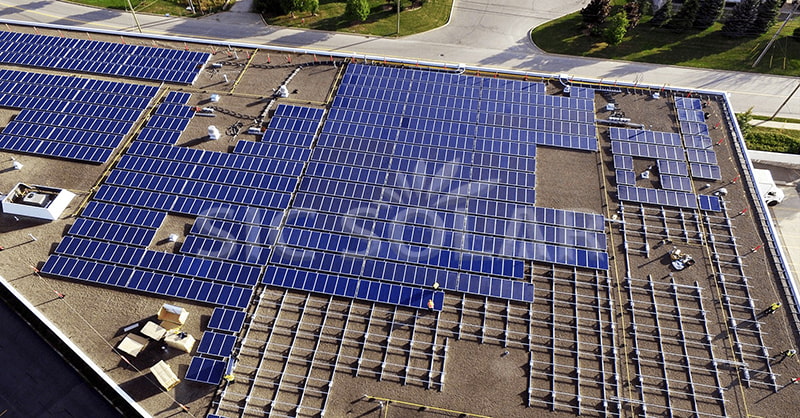
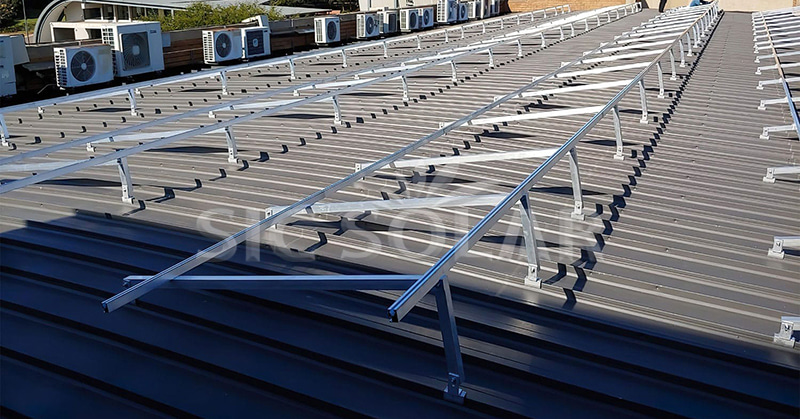
bracket flat roof solar panel mounting

One big plus of flat roofs is all the space you get. Commercial buildings usually have big, clear roofs, so installers can put in big solar panel groups without the problems you see on house roofs. This open space means you can set up the panels just right, space them out well, and add more when you need more power.

Unlike slanted roofs, flat roofs need special mounts to tilt the panels toward the sun. This lets engineers set the panels at the best angle for where they are and how the sun hits them. Adjustable or fixed mounts help balance how well the panels work with how well they can stand up to the wind. Companies like SIC Solar make flat roof mounts that are shaped to cut down on wind lift and keep the panels in place.

Another good thing is that they're easier to put in. A lot of flat roof systems use mounts that don't poke holes in the roof. This keeps the roof from leaking, which is very important for business owners. These no-hole systems also take less time and cost less to put in, which is good for big projects with tight deadlines.

It's also easier to take care of and be safe on flat roofs. Workers can walk around more safely, and you can add walkways to the system. Checking, cleaning, and fixing things is less risky than on steep roofs, so the system keeps working well over time.

How the weight is spread out is another reason flat roofs are good for commercial solar. Mounts that use weights or are bolted down are made to spread the weight evenly, so there's less stress on the building. Before putting anything in, they check to make sure the roof can handle the weight of the panels, mounts, and weights, so everything is safe and follows the rules.

Flat roofs are also better for fitting in with other building stuff. Solar panels can be placed so they don't get in the way of AC units, skylights, and vents without losing too much power. Wires can be kept neat and tidy, which makes things safer and look better. With strong stuff like aluminum frames and steel bolts, flat roof mounts can handle tough rooftop conditions.

For businesses that want to save power and be eco-friendly for years to come, flat roofs are a good choice for solar panels that can change as their needs change.

Can Solar Panels Be Installed on a Balcony?

Lots of people are living in apartments now, so they're trying to find ways to make their own clean energy, even if they don't have much room. Putting solar panels on balconies is becoming a popular way to do this in cities – they're sometimes called balcony PV systems or plug-in solar systems.

solar panels on wall

You totally can put solar panels on your balcony if a couple things are right. Balconies that get a lot of sun, especially if they face south, southeast, or southwest, are prime spots. But, you gotta watch out for shade from other buildings or parts of your balcony, because even a little shade can really cut down on how much power you get. Balcony solar panels are usually smaller than the ones you see on roofs, and they don't make as much power overall.

How you put them up is really important. Usually, they're attached to the railings, walls, or floor of the balcony with special brackets. These brackets need to be light but still strong enough to handle strong winds way up high. Brackets that you can adjust are often used so you can tilt the panels just right to grab as much sun as possible. Companies like SIC Solar make these kinds of mounting systems. They make sure they're safe, won't rust, and are easy to put in, even for small setups.

You also gotta think about safety and the rules. Your local building codes, your homeowner's association, and the utility company might have rules about putting solar panels on balconies, or they might need you to get permission first. You need to make sure your balcony can handle the weight, and that everything is attached really well so it doesn't move or fall. Also, be super careful with the electrical stuff, especially if you're plugging the panels right into your home's power.

Balcony solar panels don't make as much power as the ones on roofs or in open fields, but they can still help. Even just one panel, or a few, can cover some of the electricity you use during the day, like for your computer, lights, or internet router. If you rent an apartment or own one but can't get on the roof, this is a good way to get into solar energy.

Weather can also be a problem. Panels on balconies might get hit by stronger winds than ones on roofs, so you need hardware that can last. Usually, they're made of aluminum and stainless steel so they don't rust and stay put for a long time.

Balcony solar panels are a good example of how solar power is getting more flexible. If you plan it right, use the right mounting stuff, and follow the rules, balconies can be a small, but cool way to make your own clean energy in the city.

Flat Roof vs. Pitched Roof Solar Mounting Which Is Better?

Okay, so picking between mounting solar panels on a flat or slanted roof really depends on the building, how big the install is, and what you want to get out of it. Both are used a lot, but they're built differently, installed in different ways, and act differently over time.

Slanted roofs are usually what you see on homes. The roof's angle is already good for catching sunlight (sun-facing side), so the panels can be put on pretty close to the roof using simple stuff like rails and hooks. This way is cheaper and faster to put up because you don't need as many parts. Rainwater also runs off easily, and air flows better, which keeps the panels cooler and cleaner. since the panels are closer to the roof, they don't stick out as much, which is good for looks.

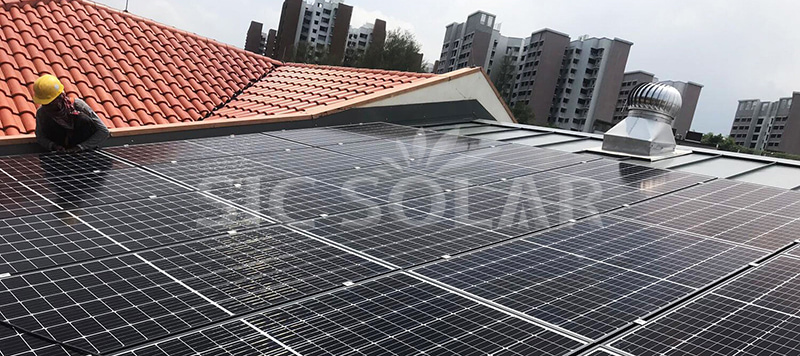
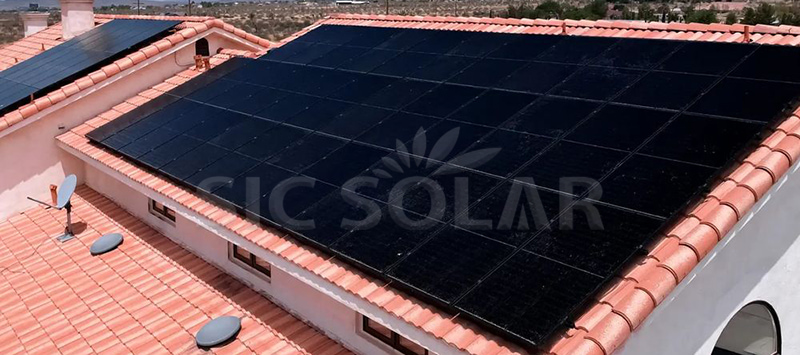
solar panels for tile roofs

Flat roofs are more for businesses and factories. Because there's no angle, the mounting stuff has to tilt the panels towards the sun. These systems are either held down with weights or bolted on, so you can pick what works best for the roof. Flat roofs let you set up the panels to get the most sunlight, which means more power, especially on big roofs. SIC Solar make special mounting stuff that's shaped to handle the wind and stay put.

solar racking for flat roofs

Putting them in is also different. Slanted roofs need to be attached just right to the roof's frame and kept from leaking. Flat roofs usually go in faster, mostly if they’re held down with weights since you don't have to drill at all. But, with flat roofs, you need to make sure the roof can handle the weight of the panels and the stuff holding them down.

Getting to the panels to fix them is another thing. Flat roofs usually have paths and space to walk around, so it's easier to check and clean them. Slanted roofs can be trickier, mostly if they're steep, which means fixing them can take longer.

The wind can also be a problem. Slanted roofs are shaped to deal with the wind, but flat roofs need special mounting stuff and weights or anchors to keep from blowing away. Good mounting parts are made to handle the wind in both cases.

How much power you get really depends on how well the system is designed, not just the roof. A flat roof system that’s set up well can beat a slanted roof system that’s facing the wrong way, and the other way around. The roof's condition, how much space you have, the weather where you are, and what you plan to do long-term all matter when picking the right way to mount the panels.

How Flat Roof Solar Mounting Systems Work

More and more people are putting solar panels on flat roofs, especially on big buildings like stores, factories, and apartment complexes. Unlike pointy roofs, flat ones need special frames to hold the panels at the right angle. This keeps them steady in the wind and stops them from hurting the roof. Knowing how these frames work helps owners make good calls about how well the panels work, how safe they are, and how long they'll last.

installing solar panels on flat roof

Usually, these frames hold the panels at an angle, not flat against the roof. This angle—usually between 5 and 15 degrees—lets the panels grab more sunlight and deal with wind better. Folks pick the angle based on the weather, where they are, and the roof itself, balancing how much power they get with how safe things are.

There are two main ways to stick solar panels to flat roofs: with weights or with bolts. Weight systems use stuff like concrete blocks to hold the frames down without poking holes in the roof. This is great when you want to keep the roof sealed tight, especially if it has waterproof layers. The frame spreads the weight around so it doesn't squash one spot and wreck the roof.

Bolt-down systems use screws or anchors to attach the frames to the roof. These are good if you live where it's super windy or if you can't put too much weight on the roof. You gotta seal everything up right to keep water out, so using good parts is key.

Keeping the panels from blowing away is also important. Flat roofs get hit hard by the wind, so the frames are built to handle it. They might have wind deflectors, sit low to the roof, and be spaced out just right. This keeps the wind from getting too wild and keeps the panels steady during storms.

How you lay things out is also a big deal. Flat roofs let you put the panels in different spots, so it's easier to work around stuff like air conditioners, pipes, or skylights. They often add walkways so you can get to everything safely without stepping on the panels..

SIC Solar develop flat roof frames that are strong, don't rust, and are easy to put together. They use stuff like aluminum and stainless steel screws so they can handle rough weather without being too heavy. As a company that makes and sells solar panel frames, they've got options for both the weighed-down and bolted-down types.

Drainage and making sure the roof can handle the weight are also part of the deal. Spacing things out right keeps water from pooling up, which can mess up both the roof and the solar panels. Engineers figure out how much weight the building can handle to make sure everything's safe.

These frames aren't just about holding panels; they're whole systems that help you get the most power, protect your building, and keep things running smoothly. If you set them up right, flat roofs can be awesome spots for making solar power.

How Much Power Can a Solar Farm Generate?

Solar farms are just big setups of solar panels made to generate electricity for the power grid, not just one building. How much power they make can change a lot based on tech stuff and the weather. That's why a solar farm of the same size can give you other outputs depending on where it is.

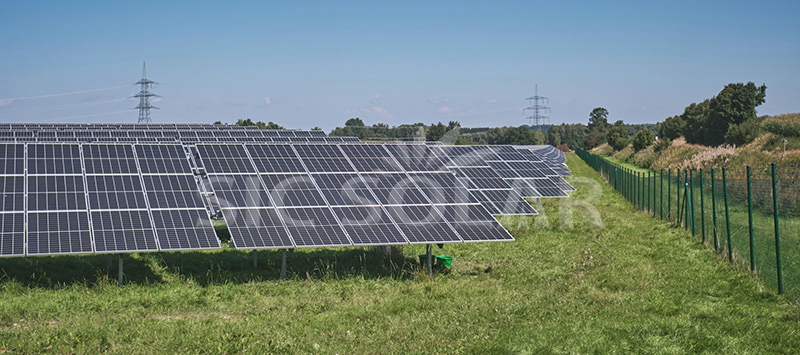
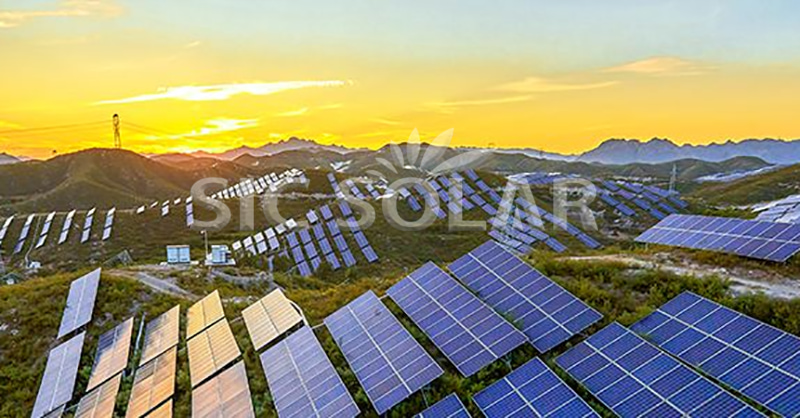
types of solar farms

The easiest thing to look at is capacity, which is usually measured in megawatts (MW). A small solar farm might be around 5–10 MW, while some medium-sized ones go from 20–50 MW. The big boys can go over 100 MW, and some special projects across the globe are almost at or over 1 gigawatt (GW). Remember, capacity is the most power a farm can make when things are perfect, not what it makes all the time.

What they really make is normally put in megawatt-hours (MWh) or gigawatt-hours (GWh) each year. It depends a lot on how much sunlight they get. In places with tons of sun, like deserts, a 1 MW solar farm might make 1,700–2,200 MWh every year. But if it’s cloudy up north, that could drop to 1,000–1,300 MWh.

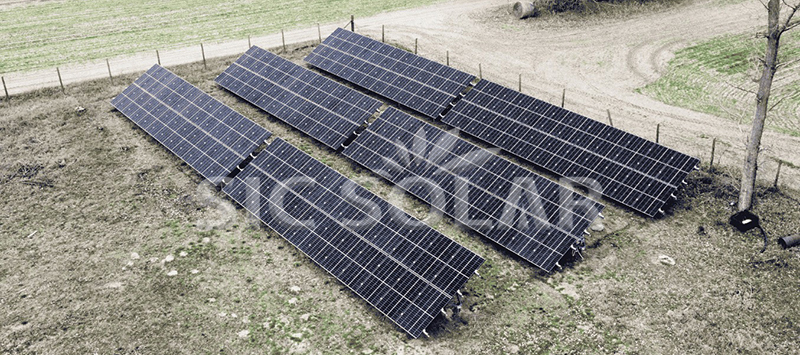
Another thing is how the panels are set up. Usually they use fixed frames propped to the ground because they are cheap and easy to get, but trackers that follow the sun can seriously raise how much power you get. Good setups help work out the best angles, spaces, and how it deals with wind, all of which changes how much power you get over time. Companies, for example SIC Solar, which makes and sells solar panel mounts, cares about keeping things steady and lined up so panels work best during their life.

How good the panels are also matters a lot. New panels can be over 20% good, so you get more power from the same space on the ground. If you mix them with great mounting systems, you can get way more power without making the farm bigger.

How much land you have and how you lay it out is also very important. The math is that 1 MW of solar panels needs about 1.5 to 2 hectares of land. Spacing is important so there are no shadows and it makes it easier to get to for repairs which is going to make sure get the same amount of power as you can for years.

Lastly, how you hook it up to the grid and any power lost matters. Inverter, cable, and ground cables all matter how much is made. Nice and study mounts which have cables and grounding ready to go can cut loses and cause lower risk, mostly in big projects that see, wind changes in temperature, and rust from age.

So, a 50 MW solar farm in a sunny place could make enough electricity to run thousands of homes each year, also cutting down on tons of carbon pollution. With better tech, panels, and plans, solar farms can make even more power as everyone wants clean energy.

Key Components of a Flat Roof Mounting System Explained

Putting solar panels on flat roofs means you need special mounting gear to keep everything steady, working well, and lasting a long while. Unlike slanted roofs, flat ones need extra stuff to get the right angle for the panels, handle the wind, and not mess up the roof. If you get how these mounting parts fit together, you’ll see how it all makes for a good fix.

solar mounts for flat roofs

First off, there's the frame. It holds up the solar panels and sets them at the right angle to grab sunlight well. Most times, these frames are aluminum because it's light, doesn't rust, and is easy to work with when putting things together. You can usually set the tilt angle or change it, so the system fits different spots and does what you need it to.

Then, you've got ballast trays or stands, which are super important if you don't want to drill into the roof. These trays carry heavy stuff like cement blocks to hold the system down. The tray design spreads the weight evenly across the roof, so you don't get too much pressure in one place. If you’re using screws, then you'd use anchors to pass the weight right to the building.

Wind guards are also key for flat roofs. Because panels are more out in the open, the wind can lift them. These guards sit at the back or sides of the panels to calm the wind and keep the system stable. By handling the airflow, you don't need as much weight to keep things down.

Rails and clamps link the frame to the solar panels. The rails line things up and space them out, while the clamps hold the panels tight. These parts have to grip well but still let the panels expand when they get hot. Companies create these clamps and rails to fit lots of different panel sizes.

You'll often see pads between the mounting stuff and the roof. These pads stop rubbing, add grip, and save the waterproof layers. Also, there are things to ground and bond everything, keeping it safe with electricity and following rules.

Little extras like clips keep the wires neat and safe from sunlight or getting beat up. Tidy wires make things safer and simpler to fix later on.

As a company making solar panel mounting gear, SIC Solar works on putting these parts together into easy-to-install flat roof kits that last. Every piece has its job, and together they help all sorts of buildings create energy from the sun reliably, no matter the weather.

What Is a Solar Ballast System?

Solar ballast systems are a way to put solar panels on flat roofs without drilling any holes. They use weight to hold the panels down, which is great for businesses and factories because it keeps the roof from leaking and still lets them get solar power.

flat roof ballast solar panel mounting

Basically, these systems have a support made of aluminum or steel that sits right on the roof. The panels go on angled frames, and then heavy stuff like concrete blocks is put in trays to keep the wind from blowing them away. How much weight you need depends on the wind, how tall the building is, and how the panels are tilted.

The best part is that because you're not drilling, you're not making holes that could leak. So, it's perfect for roofs that already have waterproofing or older buildings where you don't want to mess with the roof. This usually means less maintenance for the owner.

It's important to plan these systems carefully. Engineers figure out how strong the wind is and spread the weight out so it doesn't damage the roof. They also use things like wind deflectors to cut down on how much weight you need.

It's easy to put these systems in. The panels can be lined up with space in between so they don't block each other's sun and are easy to get to for repairs. Plus, a lot of the parts come pre-made, so it's faster to install than other systems. Companies like SIC Solar make these kinds of systems to be quick to install, strong, and work with most solar panels.

The stuff they're made of matters too. Aluminum is used a lot because it doesn't rust and is light. Stainless steel screws make sure everything stays together for a long time. Rubber pads go under the system to keep it from rubbing and damaging the roof.

Even though they're good, you have to make sure the roof can handle the extra weight of the panels and the system, mainly if you get a lot of snow or wind. If it's done right, a solar ballast system is a good way to get solar power on a flat roof without wrecking the building.

ATS Automatic Transfer Switch Seamless Dual Power Supply Solutions---Gaobo Power Solution

What is an ATS Cabinet:

ATS, also known as ATSE, stands for Automatic Transfer Switch, commonly referred to as a dual-power automatic transfer switch. The national standard definition of an ATS product is an electrical appliance consisting of one (or more) transfer switches and other necessary electrical components, used to detect power circuits and automatically transfer one or more load circuits from one power source to another.

This device is used to switch between mains power and backup power and provide electricity. When the mains power fails, it automatically starts the backup power supply (generator set) and switches preset important loads to the diesel generator set. When the mains power is restored, it cuts off the diesel generator set and automatically switches the loads to mains power. The diesel generator set automatically shuts down after cooling for 5 minutes and returns to standby mode.

ATS Dual Power Cabinet

Key Features and Benefits

The dual-power supply is an automatic transfer switch that integrates switching and logic control, eliminating the need for an external controller and achieving true mechatronics integration. It features voltage detection, frequency detection, a communication interface, and electrical and mechanical interlocks, enabling automatic, remote electric, and emergency manual control. Operation is achieved through a logic control board that uses various logic commands to manage the operation of the motor and gearbox. This enables the motor to drive the switch spring, storing energy and releasing it instantaneously via an acceleration mechanism. This allows for rapid circuit connection/disconnection or circuit switching, with clearly visible status indicators providing safety isolation and significantly improving both electrical and mechanical performance.

Switches are suitable for automatic switching between main and backup power supplies in power supply systems, or for automatic switching and safety isolation of two load devices. Transfer switches are primarily used in power distribution or motor networks with AC 50Hz, rated voltage 440V, DC rated voltage 220V, and rated current from 16 to 4000A, for switching between one main and one backup power supply, or for switching between mains power and generator sets. They can also be used for infrequent connection and disconnection of circuits and for line isolation.

Indoor ATS Dual Power Cabinet

Typical Applications:

Our products are widely used in power transmission and distribution systems and automation systems in important power supply locations where power outages are not permitted, such as fire stations, hospitals, banks, and high-rise buildings.


Features of Dual Power Automatic Transfer Switch:

(1) Employs double-row composite contacts, a horizontal connection mechanism, micro-motor pre-energy storage, and microelectronic control technology to achieve near-zero arcing (arc-free shield);

  (2) Uses reliable mechanical and electrical interlocking technologies;

  (3) Employs zero-crossing technology;

  (4) Features clear on/off position indication and padlock function, reliably isolating the power supply from the load. High reliability and service life exceeding 8000 cycles;

  (5) Integrated electromechanical design, accurate, flexible, and reliable switching; good electromagnetic compatibility; strong anti-interference capability; no external interference; and high degree of automation.

  (6) The fully automatic type requires no external control components, has an attractive appearance, small size, and light weight. The logic control board manages the operation of the motor and gearbox directly installed in the switch using different logics to ensure the switch position. The motor is a PVC insulated, moisture-heat resistant motor equipped with a safety device that trips when the temperature exceeds 110°C or the humidity exceeds 110°C and in overcurrent conditions. It automatically resumes operation after the fault disappears. The reversible reduction gear uses spur gears.


Gaobo Power Solution Factory local in Guangzhou China and offer custom service for all kinds of switchgear, PLC Cabinet, ATS Control Box etc. Welcome to visit our Factory.

Incoming vs Outgoing Switchgear Functions and Differences Explained

What is an Incoming Switchgear ?


An incoming Switchgear is a High or Low Voltage switchgear Cabinet that receives power from an external source.  Generally, it receives 10kV power from the power grid. This 10kV power is then routed through the switchgear to the 10kV busbar. The switchgear used for receiving and distributing this power is called the incoming Switchgear.


Specifically, an incoming Switchgear is the main switchgear that receives power from the low-voltage side of a transformer (low-voltage power supply) into the distribution system. In substations with voltage levels of 35-110kV and above, the incoming  switchgear is the low-voltage (10kV) switchgear cabinet of the transformer. That is, the first cabinet connected from the low-voltage side output of the transformer to the initial end of the 10kV busbar is called the incoming swtichgear, also known as the transformer low-voltage incoming switchgear.


Incoming Switchgear Cabinet


What is an outgoing switchgear cabinet?


An outgoing switchgear cabinet is a switchgear cabinet that distributes electrical energy from the busbar.  For example, a switchgear cabinet that transmits power from a 10kV busbar to a power transformer is one of the 10kV outgoing switchgear cabinets.  An outgoing switchgear cabinet is installed on the low-voltage side of the transformer to transmit electrical energy to the low-voltage busbar.  Several low-voltage switchgear cabinets are then installed on the low-voltage side to distribute power to various loads. These low-voltage switchgear cabinets are all outgoing switchgear cabinets. If the low-voltage system is introduced from a nearby source, the low-voltage switchgear cabinet where the incoming line is connected is also an incoming switchgear cabinet, just at a lower voltage. Switchgear cabinets that draw power from the low-voltage busbar are also outgoing switchgear cabinets.

Outgoing Switchgear Cabinet


The Function of the Incoming Switchgear


The incoming switchgearl is the main switchgear Cabinet on the load side. This cabinet carries the total current of the entire busbar, and its importance is evident because it connects the main transformer to the low-voltage load output.


In terms of relay protection, when a fault occurs on the low-voltage busbar or circuit breaker of the main transformer, the overcurrent protection on the low-voltage side of the transformer trips the incoming feeder panel switch to clear the fault.  A fault on the low-voltage busbar also relies on the backup protection on the low-voltage side of the main transformer to trip the incomingl switchgear. The transformer differential protection also trips the circuit breaker on the low-voltage side of the transformer, i.e., the incoming switchgear.


The Function of Outgoing Switchgear Cabinet


Electricity is supplied from the 10kV busbar to the power transformer via a switchgear cabinet; this switchgear cabinet is one of the 10kV outgoing switchgear cabinet.


An outgoing switchgear cabinet is installed on the low-voltage side of the transformer to supply electrical energy to the low-voltage busbar.  Several low-voltage switchgear panels are then installed on the low-voltage side to distribute power to various loads. These low-voltage switchgear cabinet are all outgoing cabinet.


The above two types of switchgear cabinets are distinguished by their function. They are used in both low-voltage and high-voltage systems, and the same type of switchgear (such as the low-voltage GGD and the high-voltage KY28) can be used as an incoming switchgear cabinet, outgoing switchgear cabinet.


Further Information

Specific incoming and outgoing wiring methods: top-in/bottom-out, bottom-in/top-out, side-in/top-out, side-in/bottom-out, etc.


1. If using busbar bridges for incoming power, top entry is mandatory; if using cables, bottom entry is preferred.


2. The main connection methods between the transformer and the low-voltage incoming cabinet include: copper busbar side entry, busbar bridge top entry, and cabinet bottom cable entry.


3. Cables are generally routed from the bottom in and out, while busbars are more often routed from the top in and out. The specific method depends on the designer's considerations, including equipment selection, wiring method, civil engineering conditions, investment amount, and the owner's preferences.